Photography Composition Essentials : Depth or Perspective

This post is second part of the series ‘Photography composition essentials‘. You can find other parts here.

If your photograph engages a viewer more than 5 seconds, it means it has something for the viewer to look into. If we keep aside the story part and strictly look into the aesthetic aspects of a photograph, what composition rule or principle actually responsible for all that viewer’s attention? It is Depth or Perspective in a photograph.

As we all know, a photograph is a two dimensional plane and normally it doesn’t fully recreates the actual emotions of what we saw at that time ( and it never will. That’s why we should enjoy the process of taking photographs whether we get a shot or not). If anything that can help viewer to feel a little bit of reality in a photograph, then it is DEPTH. It is the THIRD dimension of a photograph and one of the key composition rule in photography.

What Depth really offers to the viewer is an artist’s preferred way to look into the picture. The user starts from foreground, moves towards the subject and then the rest of the information is filled in by the background. The only thing that is important is actually the relation of all these elements to fill in all the missing parts.

I actually didn’t notice that much about depth before I decided to write a post on it. I was merely using it for the aesthetic aspect of my photographs. But when I actually start thinking in more detail, I started to embrace its value even more. It prepares a ground for every picture and convince the viewer that this picture is a piece of artwork and not just another snap. It separates a good luck artist from a photographer that is consistently producing good pictures.

I am a landscape lover and I do agree that a lot of the time I get good photographs by chance 🙂 and instead of taking consistently good pictures by doing my homework, I am used to increase my chances by taking MORE pictures. That’s how I used to cheat my luck because it gives me the same net results. But this approach actually hurts you when you try to go PRO because you can’t come again and again to same location and try your luck when you do professional work. That’s why people willing to hire professionals because they give them sure results the first time they get a chance.

So if you want to be a PRO then start taking it more seriously and try to conceptualize the photograph before lifting your camera to your eye. Check whether you got enough DEPTH in your photograph that can engage viewers and if not, move towards some different angle or location until you find a decent spot to convey a reasonable DEPTH.

SO now I am going to show you some of my images that in my opinion have decent depth aspect. Keep in mind that I am not a PRO and I am still working on my stills.

1. Muttrah Corniche Sunrise , Oman

IMG_8047)72dpi
Muttrah Corniche by Imran Zahid

It starts with a boat (foreground) moving through the restrooms / parking (middle ground), all the way to the distant trees mountains and beautiful clouds (Background). All these things are related and complement each other. They depict the typical setting of a beach-side resort. The shoreline here is connecting all these levels together making it one complete picture.

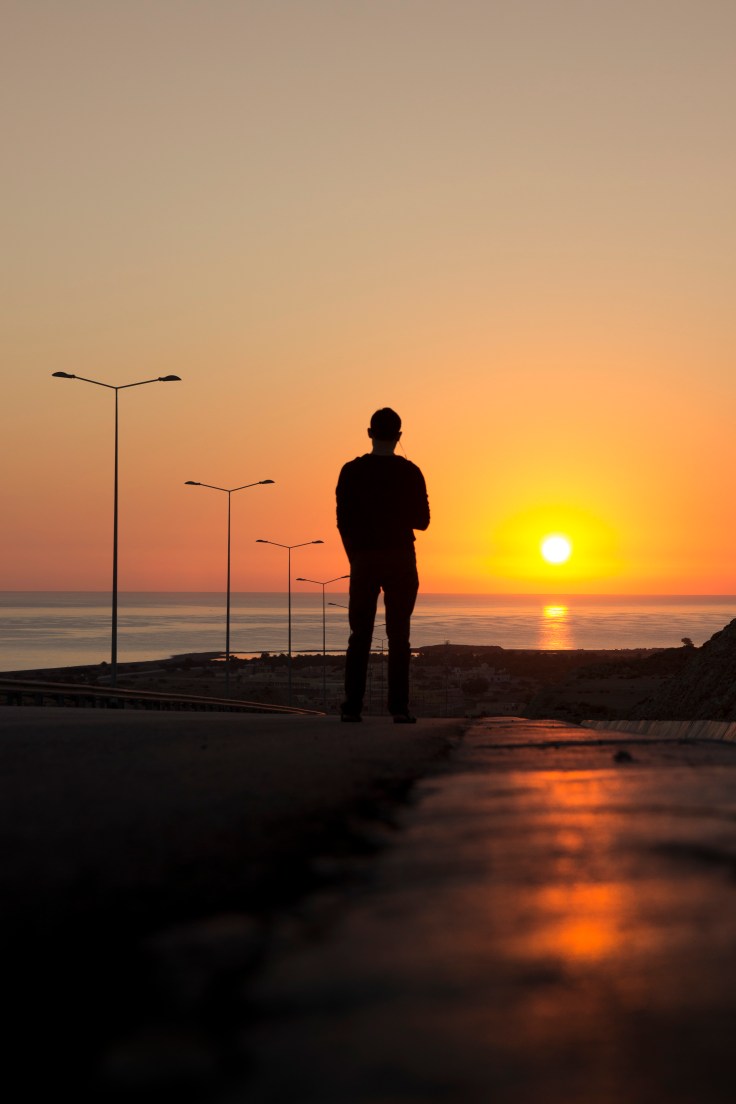
2. Sur Sunrise , Oman
Silhouette-sunrise
Sur Road by Imran Zahid-The Shades Photography

Here the road is leading towards the main subject i.e. Sunrise (Background) but instead of just a plain sunrise it leads towards it through a person standing (foreground) and town houses (middle ground). So it conveys enough details for viewer to observe. The on-going street light gives a sense of distance between all these levels.

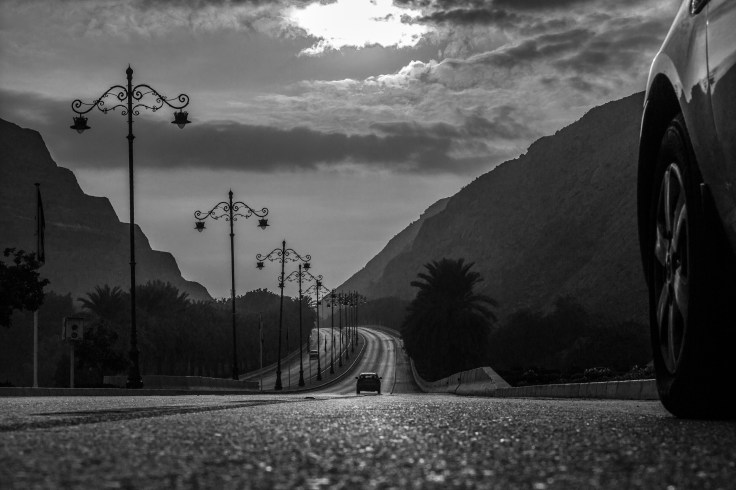
3. Sidaab Street , Oman
Sidaab Street by <a href='https://theshadesphotography.wordpress.com/'>Imran Zahid-The Shades Photography</a>
Sidaab Street by Imran Zahid-The Shades Photography

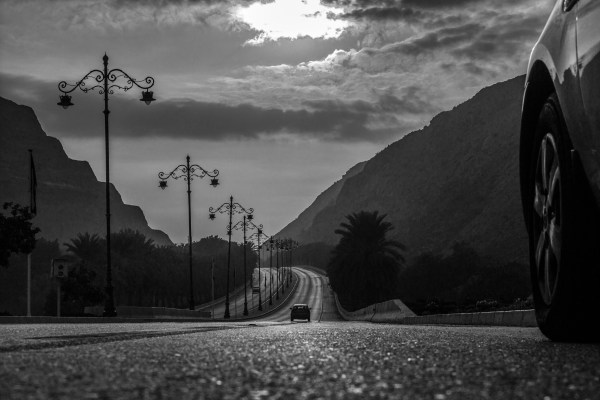
This is sidaab street in Oman that leads to the Royal Palace. The main subject of this picture is actually the road and the journey (middle ground) but to create enough interest I put a car tire (foreground) and mountains and clouds (background). The street lights provides a sense of distance among foreground/middle ground and background.

4. Why So Serious , Quryaat Road Oman
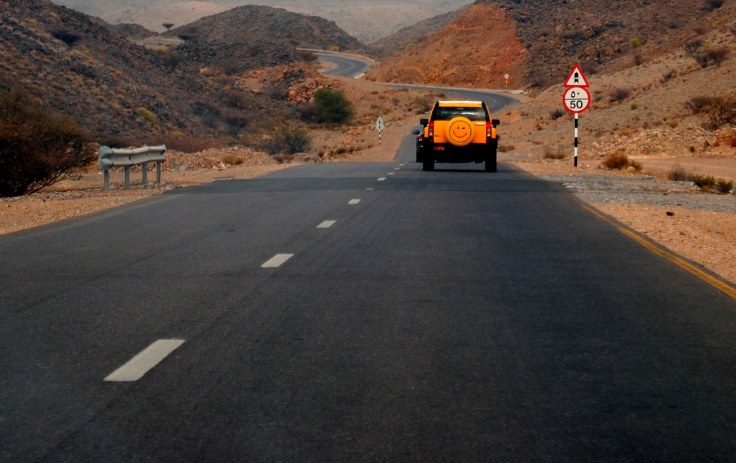
Quryaat Road by <a href='https://theshadesphotography.wordpress.com/'>Imran Zahid-The Shades Photography</a>
Quryaat Road by Imran Zahid-The Shades Photography

I guess by now you know that I am obsessed with roads and I accept that I love roads and I found them to be a very attractive subject when it comes to depth and perspective. Here off-course that car with a smiley spare wheel is the subject (middle ground) along with the road in front (foreground) leads towards the subject and all the way to the mountains (background).

OK, enough of landscapes and roads. Now I am going to show you some examples from street/people photography too.

5. The fisherman , Sifah beach , Oman

15817282539_a328351f1e_z
The Fisherman by Imran Zahid

Here there are no leading lines but from the proportion it is clear that fisherman on left is our subject(foreground) which is complemented by the boats (middle ground) and it goes towards the sea where he used to do fishing. All levels are perfectly related and gel together.

6. Muttrah Fish Harbour , Oman
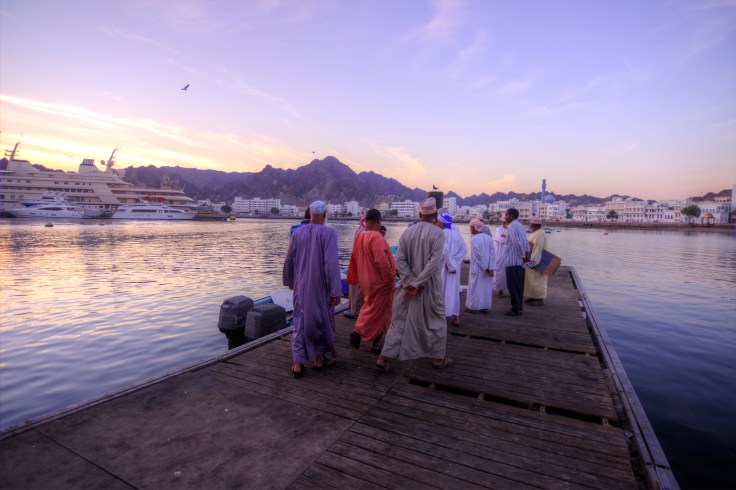
Mutrah Fish Market by <a href='https://theshadesphotography.wordpress.com/'>Imran Zahid-The Shades Photography</a>
Mutrah Fish Market by Imran Zahid-The Shades Photography

The people here are either fishermen who came from fishing trips or the buyers who wants fish. The composition is simple. It starts with harbor (foreground) towards subject( which are fishermen in middle ground) all the way to water and their ships (background). No need to explain further.

Conclusion

I hope I made my point pretty clear now that when I am talking about DEPTH or perspective in a photograph, I am referring to all these levels (fore/middle/background) and their relationship with the entire picture. That makes a photograph complete and it makes people believe what they are witnessing. It makes it more interesting and entices them to look into each and every detail of a photograph.

You have some good examples of depth in a photograph? Do share with me 🙂

Oman for Photographers

Note: For customized photography tour in Oman, please check out my post ‘Photography tour in Oman

If you just moved to Oman or planning to move here and you are addicted to photography as well then chances are that you are looking for places where you could satisfy your appetite for photography.

The good news is, Oman is an ideal place for photographers. Whether you are interested in Landscapes, street, culture or portraits. You will find ample amount of photographic opportunities in here. The locals here are quite friendly and you will not find any difficulty while interacting with them provided you respect their traditions and cultural values. You don’t have to worry about any Law and order insecurities as well.

I have been working here for quite some time but I started photography a little more than a year ago. During my time here I happen to visit quite a few places and I do visit them regularly to keep my photo stream up and running. For long time ,I have been thinking about making a list of places that are good for photography tours.  After a lot of brainstorming I decided to categorize my list according to type of photography and write City names against it. That list will guide anyone who is new to Oman to plan their trip in advance. Off course if you have a good eye you can get any type of images anywhere but this list is just a quick start guide for photographers who are new to Oman.It is a work in progress and I hope a lot of my friends in Oman could correct me and guide me to make this list even better and more useful.

P.S This post contains mine as well as lot of other photographer’s images . All the images have copyrights to their respective owners. I have tried to give due credit to each one of them by linking back their respective business / Facebook pages. If you don’t want your image to be included here for any reason or want to change something about it,PM me or drop a comment and I will do the necessary.

Beaches / Corniches

Oman has some of the most stunning and breathtaking beaches in the world with its coastline stretches to more than  3000 km.They are known for their purity of sand,scenic nature and sturdy surrounding rocks.If you are into seascapes, there is no better place than Oman for you 🙂 I am listing just a few well-known beaches here.

  • Yiti (Muscat)
  • Jabal e Sifah beach (Muscat)
  • PDO beach (Muscat)
  • Al Bustan Beach (Muscat)
  • Qurum beach (Muscat)
  • Qurum Corniche (Muscat)
  • Mutrah Corniche (Muscat)
  • Al Mughsail Beach (Salalah)
  • Taqah Beach (Salalah)
  • Sawadi Beach (Barkha)
  • Ras ul Hadd (Sur)
  • Ras ul Jinz (Sur)
  • Sink Hole (Sur)
  • Duqm Beach (Duqm)

Mountains and Wadis(valleys)

After seasides and beaches , if there is one thing that definitely draws your attention are the beautiful Wadis (valleys) and majestic mountains in Oman. You will find these almost everywhere in Oman. Some of them are totally developed into tourist attractions while others remain quite untouched in their natural state.

  • Wadi Shab (Tiwi)
  • Wadi bani Khalid (Wadi bani Khalid)
  • Wadi Arbeieen
  • Jabal e Shams (Alhamra)
  • Jabal e Akhdar (Alhamra)
  • Wakan Village (Nakhal)
  • Wadi Darbat (Salalah)
  • Marneef Cave (Salalah)
  • Wadi Dayqah Dam (Dayqah)
  • Quryat Dam (Quryaat)

Architecture

Oman has given special attention to preserve its ancient and traditional values when it comes to preserving its architecture. You will observe this vary principle while visiting various mosques , forts and markets. Along with its oriental nature , you will notice that they are against high rise buildings and that is one interesting thing that sets Omani architecture apart from other Gulf states and creates its own charm.

  • Nizwa Fort (Nizwa)
  • Bahla Fort (Bahla)
  • Nakhal Fort (Nakhal)
  • Jalali Fort (Muscat)
  • Sur hanging bridge (Sur)
  • Sultan Qaboos Grand Mosque (Muscat)
  • Said bin Taimour Mosque (Muscat)
  • Al Ameen Mosque (Muscat)
  • Opera House (Muscat)

Old Souqs (Markets)

Being Traditionalist in practice, Oman is  rich in culture and heritage. It has a number of sites listed in UNESCO world Cultural and heritage sites including some of the oldest souqs (markets) which includes.

  • Mutrah Souq/market (Muscat)
  • Nizwa Souq (Nizwa)
  • Matrah Fish Market (Muscat)
  • Al Hafah Souq (Salalah)
  • Sohar Handicraft Souq (Sohar)
  • Al Rustaq souq (Rustaq)

Resorts

So up till now we have been looking for natural beauty in beaches , mountains, wadis and all that architecture and cultural heritage .But if you are that exotic type of person who likes to get comfortable in big resorts, Oman has a lot to offer.Below are some of the best resorts in Oman.

  • Rotana Resort (Salalah)
  • Sifawy Boutique Hotel. (Muscat)
  • Barr Al Jissah Resort and Spa. (Muscat)
  • Al Bustan Palace (Muscat)

Deserts

No middle eastern country is completed without its Deserts and Oman has its fair share of Deserts too.You will find some of the exotic desert safari locations in these sand driven areas.Some of the major deserts are.

  • Wahiba Sands
  • Hema Desert

Famous Parks & Streets

  • Qurum Park (Muscat)
  • Riyam Park (Muscat)
  • Naseem Park (alAmraat)
  • Al Sahwa Park
  • Alkhawair Street(Muscat)
  • Al Amaraat Street (Amraat)
  • Sidaab Street (Mutrah)

 Credits

I am thankful to following photographers at (Friday Shoot Out) FSO Muscat whose images I have used here along with mine with permission.

Krishnakumar Omanakuttan – krishnakumar photography
Prakash Wadhwani – Prakash’s Stolen Moments
Nilesh Potdar
Sunil S Rao – Prismphotos
Baiju Jose
Shiekh Mohammad Haris – SMH Photography
Benito Hermis – 500px
Guru Acharya – Guru Acharya Photography
Uwe Richter
Henz B Solih

If you have any correction or you went to some place in Oman and have amazing pics.Do send me your images and location name and I will accommodate it here.

Why silhouettes are beautiful

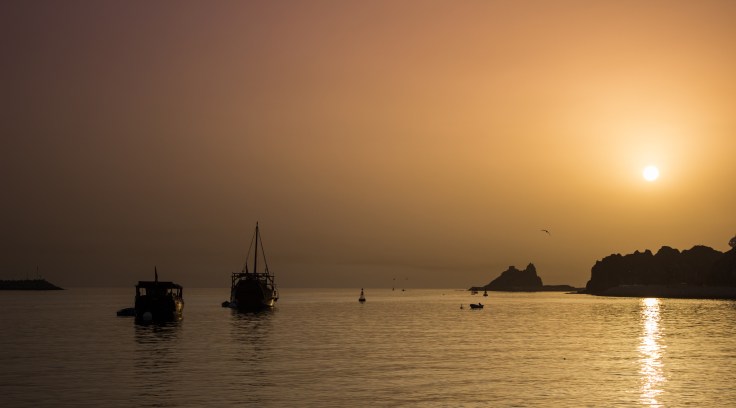
I love silhouettes as much as I love shooting in black and white. They are unorthodox. They don’t have much definition but they contain much more drama. Whats actually amazing about silhouettes is that rather than major attention on subject , the actual center of attraction is background.This makes it more interesting and different. It definitely adds more shapes and form to your photograph. They convey a message in an artistic manner and let the viewers’ imagination to fill up the details and complete the story. Its a classic text book example of LESS IS MORE.

So, if you like silhouettes and you want to capture them with their full potential. Below are some pointers that you should keep in mind while doing silhouette photography.

1. Look for high contrast (obviously)

IMG_3980
Mutrah Corniche by Imran Zahid

Yes it is pretty obvious but it is very important and that is why I started with this point. A lot f people are actually selecting a wrong subject against wrong backdrop. The low contrast situations are good for portraits and may be for landscapes too but its a big NO in silhouettes.  So first of all start with a high contrast situation.

2. Choose an interesting background

IMG_sunrise_72
The Rising by Imran Zahid

Remember visually silhouettes are more of a background than foreground.Background is roughly the 80% of a silhouette photograph.So pay close attention to your background.If it is not interesting enough than you couldn’t able to make a strong photograph. Sunsets and sunrises are so much popular as silhouette backgrounds because they have very dramatic background which makes photograph visually appealing.Your subject doesn’t have details so its the background that has to fill this void visually. Select backgrounds that are strong in color and texture to make an impact.

3. Look for familiar shapes for silhouette

15616875214_c7bf1267de_z
The Lone survivor
by Imran Zahid

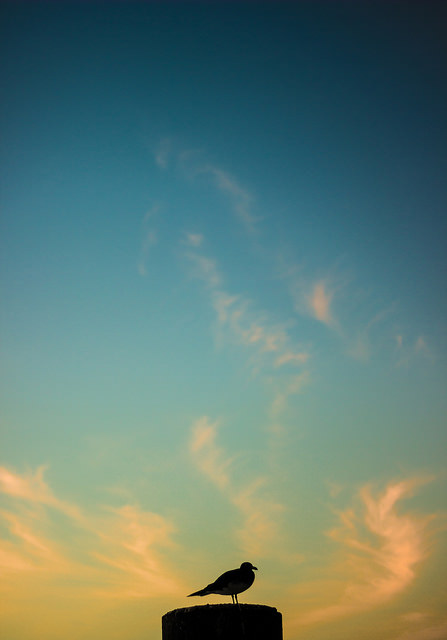
Shape familiarity is the key. Silhouettes are definition-less.They only have shape and that’s it.Look for subjects in silhouettes that everyone is aware of of and just by looking at it anyone can know what it is. If a viewer has took close enough to recognize it , the photograph will fall flat.Internet is filled with silhouette photography having people,animals and trees as silhouettes for the vary same reason. Your subject should have a very definitive shape with string outlines.Don’t depend on the intelligence of viewers.Make it as obvious as you can.

4. Use negative space to your advantage

15453828827_207bbaa581_z
Ras ul Hud beach by Imran Zahid

There is so much I want to emphasize about negative space.Refer my post Photography Composition Essentials: Negative Space . Negative space is actually a breathing space in your photograph. It is a place where viewer’s eyes can rest after observing other details in photograph. It will actually calm down your eyes and ease your mind. It brings a sense of serenity to image. Use it to your advantage.The smaller the silhouette in your photograph the better. But place it on the strongest position where it can make maximum impact.

5. Experiment a lot

TheCave
The Cave by Imran Zahid

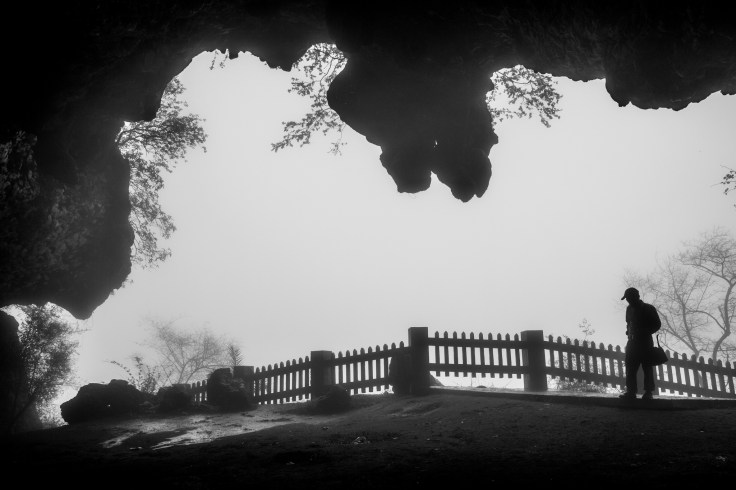
Don’t just limit yourself to sunrises and sunsets.Yes they are interesting and they have beautiful colors in it but there are lot more opportunities to do silhouettes. Just look for it. For example, the above Cave picture is simply shot in heavy fog. You can experiment with fog,rain,a lot of smoke and practically anything that reduces definition from your subjects. Introduce a little reflection or shadows and it will spice it up the whole photograph. Break the cliches. Try to come up with your own ideas and remember : RULES are meant to be broken.

IMG_7019

Amazing resources on internet

Up-til now I only presented you with my photographs.The internet is filled with amazing silhouette photography.You can find some of the finest examples on this subject .So , apart from my own photographs  ,I am giving away some of the reference of stunning silhouette collections you can look into for your inspiration.Do submit your own silhouette images and i will add them here in specific examples.


The Power of Black and White photography

I love black and white (  monochrome ) photography a lot. I can’t help it. Whenever I start post processing any of my photograph I always first try to convert it to black and white and see if it looks good or not. I was wondering lately, why I like some pictures more in black and white than in color. This question is very important because it gives the answer for which type of photographs we should convert to black and white and why. So I came up with some of the reasoning that I hope you will find useful and insightful. Feel free to play around with these ideas.

1. It reduces distraction.

15118342204_8d419c7ab7_b_d
The Aim by Imran Zahid.You see how it reduces the distraction of different color clothes of all these people and help you focus of the subject.

Ever wonder why most of the street photography is in black and white? Because in street photography we have very less control on environment. You can’t control the annoying and distracting bill boards and ads all around street. You can’t control the colorful cars and other stuff that grabs all the attention instead of your subject. Yes you can control these things by changing your viewpoint and angle and all that but still most of the time you don’t have that much time and you want to grab the moment quickly. So it helps in saving some of your shots that otherwise don’t work in color. But don’t make it an excuse to not think before shoot in street photography.

2. It helps you emphasize more on story than visual

IMG_0670
Contemplation by Imran Zahid.

In black and white photograph, visual candy is not there so viewer can concentrate more on the story and emotion behind the photograph rather than aesthetics. This where composition became so much important because it’s the only way to tell viewers about the main subject and story.

3. It brings a world unknown to us

15915231572_f450b356ff_b_d
Down the memory lane by Imran Zahid
IMG_7841 - Copy-3
The Journey by Imran Zahid

We as human beings are bound to see things in colors by default. Black and white brings a whole new world in front of us that we are unaware of. It makes it more uncertain and exciting for us to see things in entirely different way. It brings that antique and classic look into the pictures which make them timeless and precious. That’s how our mind works when we see any black and white photograph.

So these are the main reasons why we like black and white photographs. The photographs that tell story bound to have these characteristics and are best suited for monochrome treatment. Now here is the list of techniques that you can employ to create really stunning black and white photographs

1. Composition

palace (2)
The Road by Imran Zahid

Composition is everything in any type of photography and in black and white, it is literally everything because you don’t have colors to complement it. All you have is composition. Through proper composition you can direct the viewer to observe certain parts as subject and remaining as background. Placing a subject to the strongest part in frame and arranging other elements is really important and it makes or breaks any image. Rules of composition like rule of thirds, leading lines and negative space are the key to black and white photograph.

2. Contrast

tea_making
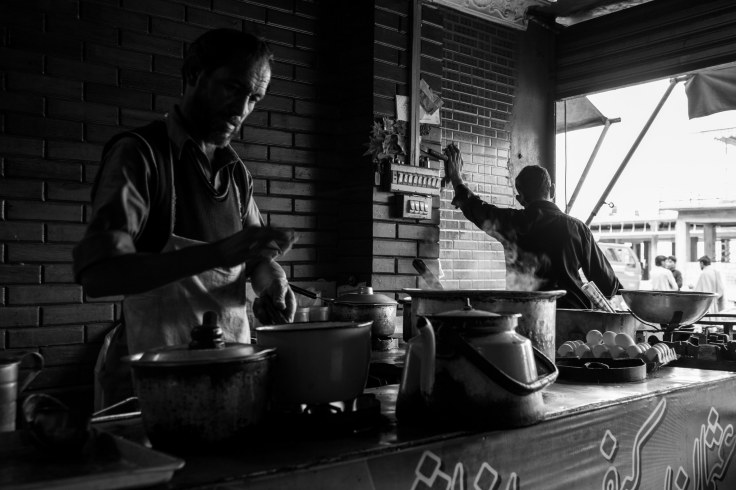
Tea making by Imran Zahid

Black and white photography is all about contrast. The more the better. A lot of shades of grey will not make a dramatic black and white photo. Drama starts where there is more contrast, more blown out and darker areas. These imperfections are actually the one that creates emotions in black and white photography. Always look for contrast in a photo. One tip regarding exposure. Expose for lighter areas as you can recover details in darker areas more easily in RAW files as compare to recovering highlights. Another tip is to shoot in RAW format and set built in black and white option. That way you can see the result immediately and even if you want color RAW file always contains color information. One final tip regarding conversion to B&W is to use separate color sliders after conversion to adjust certain parts of image like blue color to adjust sky. Also you can use luminescence sliders to adjust areas by their brightness.

3. Convey an emotion or story

18622493935_a0f24aa9a8_z
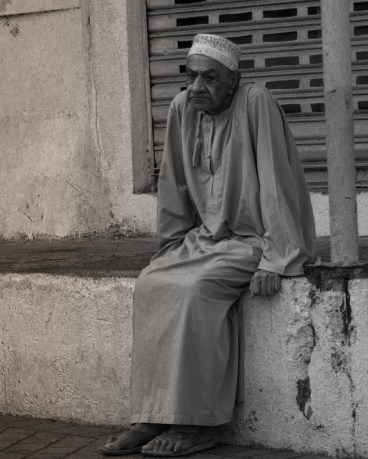
Wisdom by Imran Zahid

Since a black and white photograph doesn’t have colors so you cannot just purely depend on visuals. You need to convey some story or some emotion else your photograph will fall flat. It doesn’t have to be a photo journalistic in nature. A simple smile or some interesting character in its surrounding is more than enough but make sure it conveys enough details.

4. Look for strong shapes and texture

TheCave
The Cave by Imran Zahid

Strong shapes and lines and curves always makes a photo more interesting. In black and white it is much more prominent as these strong lines and curves actually defines edges and separates one object from another. So try to integrate some strong lines and shapes for better definition and detail. Texture is also more observable in black and white photograph than in color.

5. Look for some interesting light

15486699860_874eb5331b_z
Walking Shadows by Imran Zahid

Try to look for dramatic/directional lighting source in your photograph. Directional light defines edges more clearly and hence bring details and definition in your objects. It can bring contrast in your photograph. Also dodging and burning is one classic technique that a lot of black and white photographers use to highlight the areas in image that they want their viewers to concentrate more on.

So here it is . Everything I know and discovered about black and white photography over the time. If you didn’t tried it. Do it. Its worth it. Its a bit difficult in some respects but its timeless.Its creative and worth giving a shot. Feel free tp pitch your ideas in comments sections.


Blog at WordPress.com.

Up ↑